
High Blood Pressure
Introduction High blood pressure which is also called as hypertension, and is one of the common medical conditions. Here, the force of the blood against the
Introduction
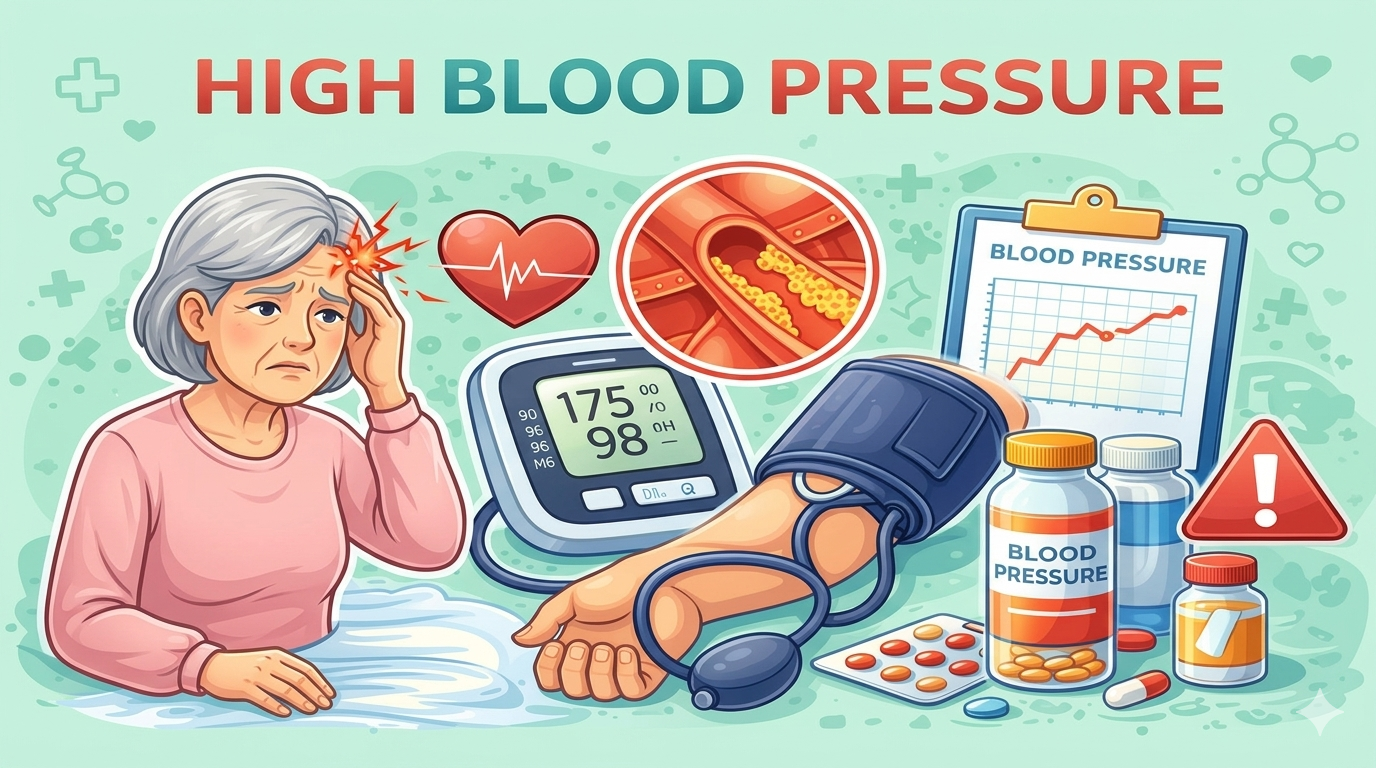
High blood pressure which is also called as hypertension, and is one of the common medical conditions. Here, the force of the blood against the wall of the arteries remains consistently too high. Over time, an uncontrolled blood pressure can easily damage and increase the risk of serious health problems like-
● heart disease
● stroke
● kidney disease
● and vision loss.
High blood pressure is one of the silent killers that can surround people with no symptoms. Hence, if any difficulty arise, then there is a need for regular monitoring.
What is blood pressure?
Blood pressure measures the exact force thereby circulating the blood on the wall of arteries.
However, a blood pressure reading consists of two numbers-
Systolic Pressure which is the pressure when the heart beats and pumps blood.
Diastolic Pressure, the pressure at which the heart rests between beats.
Different blood pressure categories
| Category | Systolic | Diastolic |
| Normal | Less than 120 | Less than 80 |
| Elevated | 120–129 | Less than 80 |
| Stage 1 Hypertension | 130–139 | 80–89 |
| Stage 2 Hypertension | 140 or higher | 90 or higher |
| Hypertensive Crisis | Above 180 | Above 120 |
Types of High Blood Pressure
➤ Primary
One of the most common types is called hypertension; however, it gradually develops over years when not treated, and the cause becomes unknown.
➤ Secondary hypertension
This type of majorly results from underlying conditions which are-
thyroid disorders
kidney disease
sleep apnea
adrenal gland disorders
or certain medicines.
➤ Causes of High Blood Pressure
- Several factors can contribute to hypertension
- Lifestyle factors
- If you take excessive of salt.
- Increased body weight
- Lack of physical inactivity
- Smoking and excessive alcohol intake
- Chronic stress
- poor diet
➤ Some medical conditions
- Diabetes
- sleep apnea
- hormonal disorder
- high cholesterol
- Kidney disease
➤ Symptoms of High Blood Pressure
Most of the people experience no symptoms, but in some severe cases, symptoms may include-
- Blurred vision
- Headache
- dizziness
- Shortness of breath
- Fatigue
- chest pain
- nosebleed
➤ Some of the risk factors involved
- When you are over 40 years old
- Having a family history of hypertension
- Drinking excessive of alcohol
- Having diabetes
- Experiencing chronic stress
- Consuming Tabacco
- If you are overweight
Complications of Untreated Hypertension
When high blood pressure is not treated, there can be certain complications-
➤ Heart problems
There can be a heart attack, heart failure and also an enlarged heart.
➤ Stroke
High blood pressure can even damage arteries supplying blood to the brain.
➤ Damage of kidney
Hypertension can weaken blood vessels in the kidneys and thereby reduce their ability to filter waste.
➤ Vision problems
There can be damage to retinal blood vessels and can impact vision impairment.
➤Cognitive Decline
Long-term hypertension can even result in memory problems and even dementia.
How Is High Blood Pressure Diagnosed?
Doctors can diagnose hypertension with the help of-
Blood pressure monitoring machine where multiple readings may be required over several benefits.
➤ Additional tests
There can be blood tests, urine tests, Electrocardiogram, Echocardiogram and also Kidney function tests.
Treatment of High Blood Pressure
➤ Changes in your lifestyle
It is advisable to reduce the intake of salt, like sodium intake, and thereby lowering the down of blood pressure level.
Try to consume a rich and healthy diet, like vegetables, fruits, whole grains and also low fat dairy products.
Do not follow to smoke and even consume alcohol.
Limiting alcohol where moderation is required for blood pressure control.
Manage stress, which will help through Yoga, Meditation, Deep breathing exercises and even Adequate sleep.
➤ Medications for High Blood Pressure
If there is no impact through lifestyle, then doctors may also prescribe some of the medicines, such as-
- Diuretics
- ACE inhibitors
- Angiotensin II receptor blockers (ARBs)
- Beta-blockers
- Calcium channel blockers
When to seek doctor to manage high blood pressure?
Consult a healthcare professional if-
Blood pressure readings consistently exceed 130/80 mmHg
When you are experiencing chest pain or even shortness of breath
You have a severe headache or even vision changes
Having risk factors, like diabetes or kidney disease
The regular check-ups can easily help to detect hypertension early and prevent complications.
Conclusion
High blood pressure is a serious problem, but it can be controlled when the right treatment is taken on time. It often develops without any symptoms (that people can see). There is a need for regular monitoring and to follow a healthy lifestyle, with proper medicine intake, and upon consultation with a doctor ahead. This will help to reduce the serious complications connected to your heart, stroke, kidneys, and other parts.
It is advisable to opt for an early diagnosis and try to achieve consistent management to achieve better health.
Can high blood pressure be controlled?
Primary hypertension is seen to be controlled completely but can be controlled with oral medicines and making changes in lifestyle.
Which is the best diet to manage high blood pressure?
A diet which is rich in fruits, vegetables, whole grains, lean proteins, and low-fat dairy products is often recommended.
Is high blood pressure dangerous?
Yes, when blood pressure is not controlled, then there can be a risk of heart attack, stroke, kidney problems and even other serious problems.